UN-Style Voice-Over using AI: How TV broadcasters localize documentaries
Industry Insights
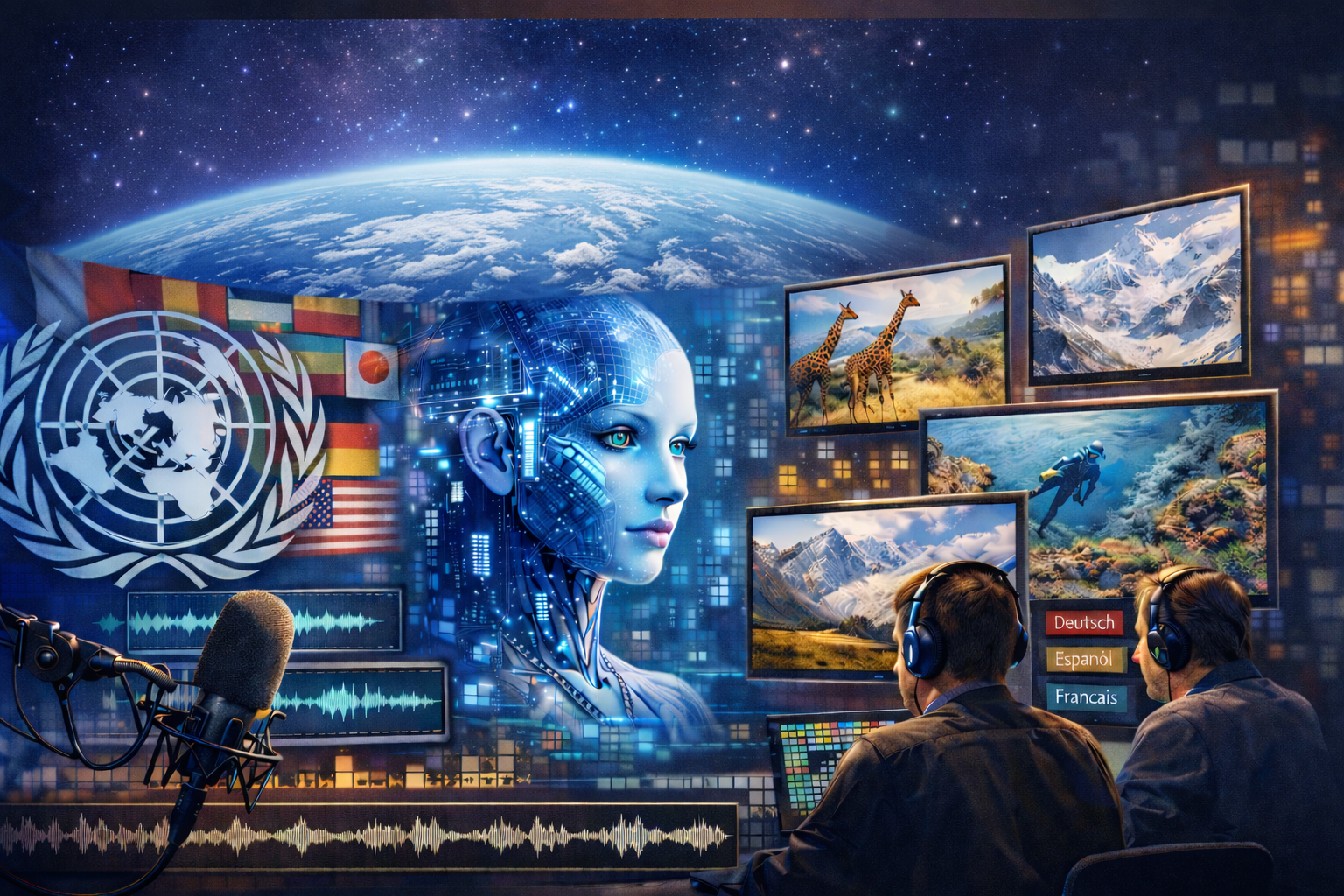

For a long time, dubbing studios and classic localization were the gold standard for international distribution. But especially for documentaries, reports, and magazine formats, another method has become established - one that has been standard in TV for years: UN-style voice-over. The original audio sits quietly in the background, while the translated version is clear and present in the foreground.
This format is editorially proven, audience-accepted, and used worldwide. The catch: the workflow behind it is still often slow, expensive, and hard to scale.
And that’s exactly where AI is changing the game.
Today AI can:
For factual content, authenticity matters most - not acting.
And that’s precisely the sweet spot where AI is extremely strong today.
One open research area remains the recreation of very strong emotions and complex emotional states.
But UN-style voice-over in docs and reports typically requires:
In short: content where AI already performs at broadcast level.
The fact that UN-style voice-over doesn’t require full cinematic lip synchronization isn’t the main reason—but it’s the big scaling booster:
Meaning: AI can automate 80–90% of your voice-over workflow without changing your format.
That radically reduces time and cost.
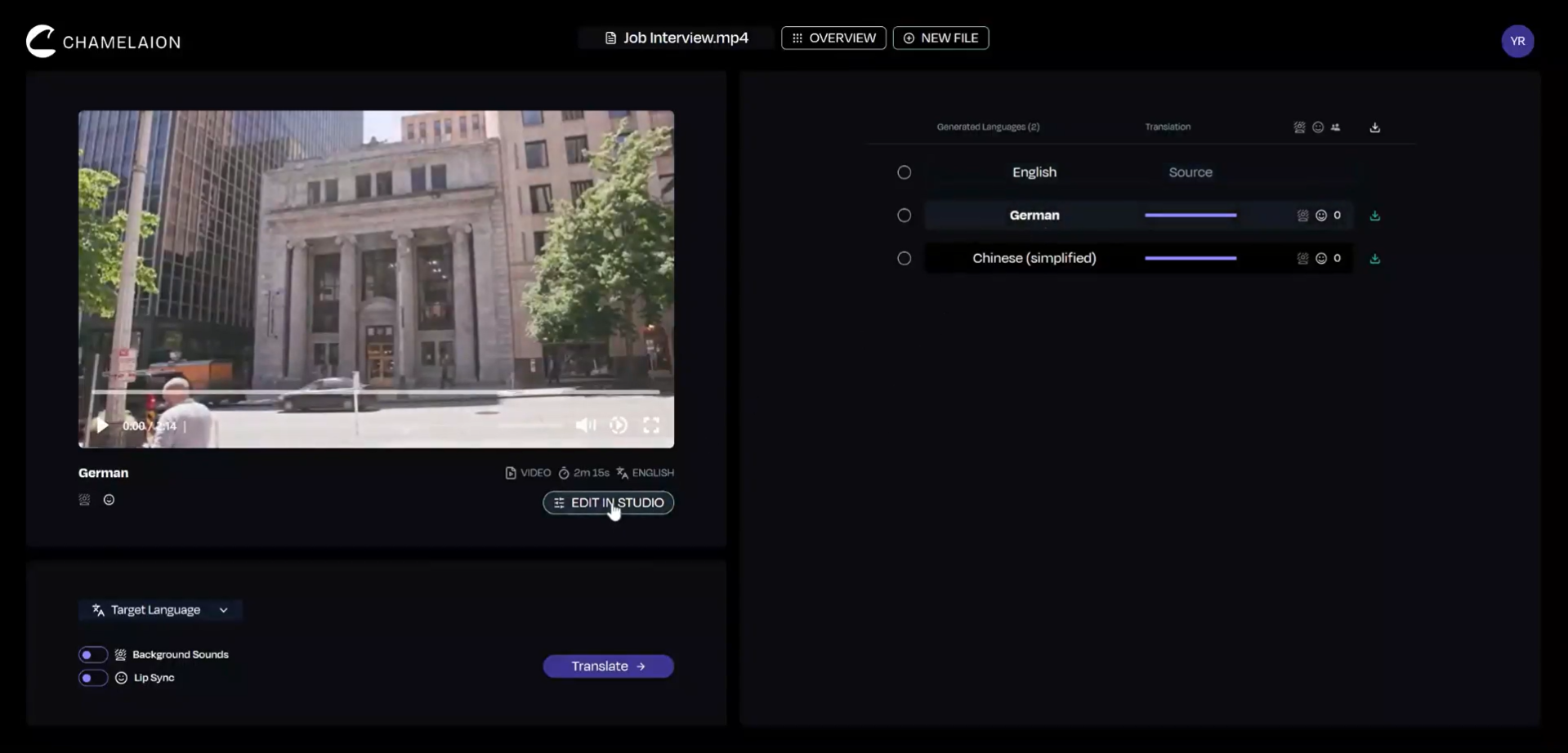
With a modern AI video translator, a documentary can already be transferred into new languages at very high quality with a single click.
In practice, the optimized workflow looks like this:
1) Automatic translation & voice-over creation
AI translates dialogs and interviews, generates a native language track, and lays it cleanly onto the video.
2) Original voices remain intact
A real game changer for many broadcasters:
The authenticity of the original stays, because AI reproduces the speakers’ tone and character very closely.
3) Rights issue? Not a show-stopper.
If voice rights or permissions aren’t available for certain people, you can generate an artificial voice that comes very close to the original - without copying it.
This makes archive and interview material internationally usable that used to be hard to localize for licensing reasons.
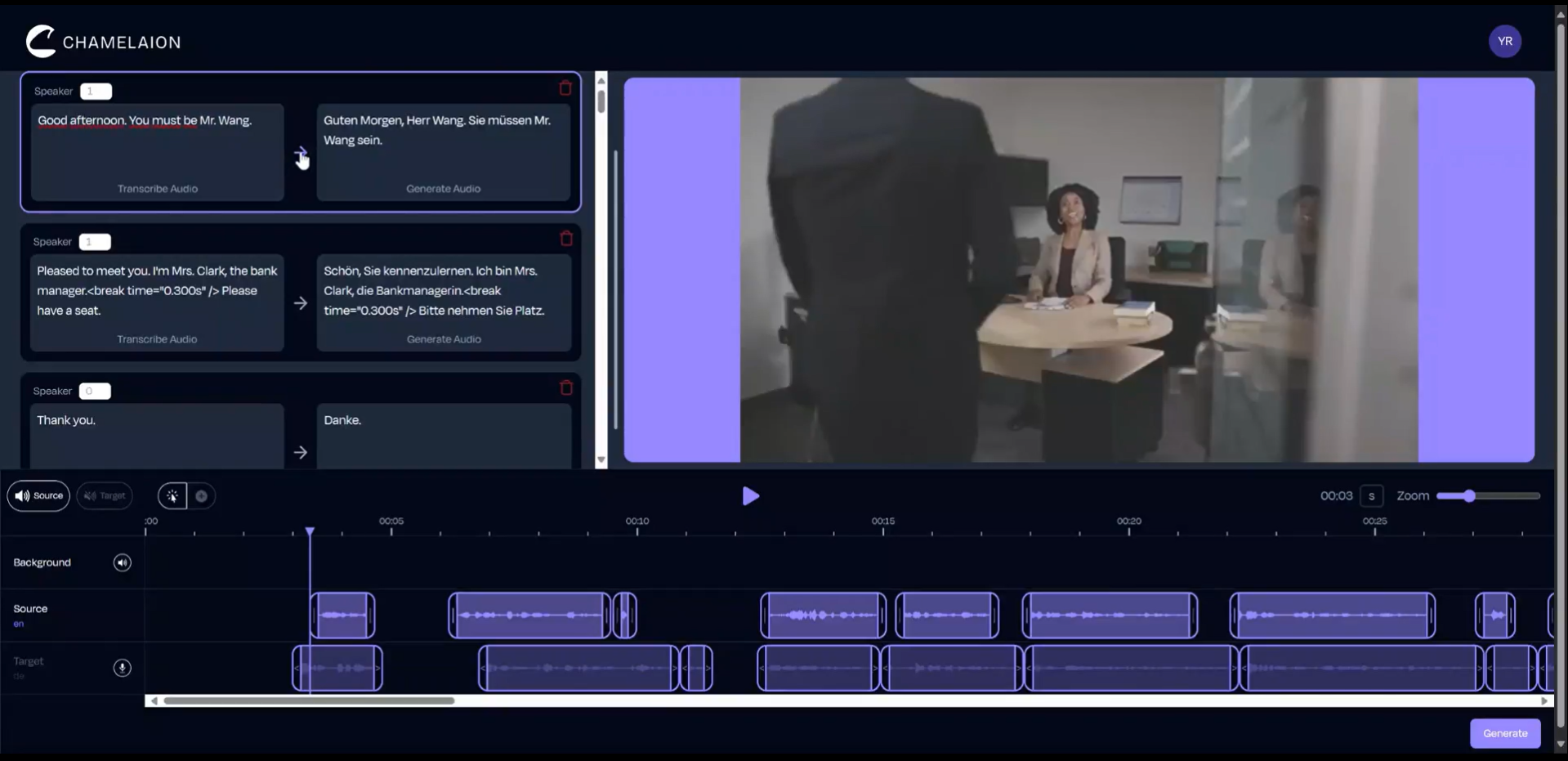
One-click already delivers very good results.
But for true TV standards, you almost always need a final quality and timing check.
That’s why tools like our CHAMELAION Dubbing Studio exist:
In short:
AI does most of the work automatically — the Dubbing Studio gives you full editorial control for the final broadcast-ready polish.
No long DAW chains. No complicated post workflows.
And simple enough that teams master it confidently after a short onboarding.
Some content needs more than just “very good” — for instance sensitive topics, investigative docs, or primetime slots.
For that, there’s an optional second quality layer:
proofreading by certified native speakers.
Our Professional Dubbing Service includes:
Costs are higher than pure AI - but typically still only about 10–20% of what classic dubbing studios charge for comparable formats.
With AI voice-over, you don’t change the format - you only change the effort behind it.
What used to take weeks or months is now possible in hours.
That brings concrete benefits:
Especially for large documentary volumes or FAST/AVOD distribution, this is a real scaling lever.
For anyone who wants to go one step further and use AI to the fullest:
With AI lip-sync, lip movements can already be matched precisely to the new language.
The key difference from classic film lip-sync:
Because no manual frame adaptation is necessary, lip-sync becomes much faster and less expensive than in the classic dubbing process.
For many factual formats, UN-style voice-over remains ideal.
For high-end documentaries, streamer looks, or international primetime, AI lip-sync is the logical next step.
UN-style voice-over has been TV standard for decades.
What’s new: we can now scale it in broadcast quality.
AI localization makes it possible to distribute documentaries and factual formats:
If you want to roll out your documentary or factual library internationally:
Now is the moment to modernize the workflow — without changing the format.
Curious how fast UN-style AI voice-over really is?
Try CHAMELAION yourself: sign up quickly on the platform and translate your first video for free — from the one-click take to broadcast-level polishing in the Dubbing Studio.
Prefer a short live demo?
Book a free session with one of our sales experts — we’ll gladly show the workflow on your specific format.
👉 Book a demo
1) Which TV formats are especially suitable for AI voice-over?
Primarily factual formats such as documentaries, reports, magazines, news interviews, reality/factual entertainment, and archive material—everywhere UN-style voice-over is standard and authenticity matters more than acting.
2) How natural do the AI voices sound?
AI now produces very natural speech with credible emphasis and vocal color. Especially for factual doc/interview tonalities, the result is often barely distinguishable from the original. Very strong emotions remain the biggest challenge—but they usually play no role in these formats.
3) What happens if voice rights are missing for certain people?
You can use a legally safe AI voice instead of the original—one that comes very close to the speaker without copying them. This keeps the content understandable and authentic without licensing risk.
4) Is one-click already ready for broadcast?
For many online or internal use cases, yes. For classic TV we recommend to set up a brand glossary in CHAMELAION to define custom translations for technical terminology. In addition to that a final broadcast check will secure the 100% accurate quality: timing, loudness, pauses, text refinement and, if needed, stylistic adjustments. That’s quick in the Dubbing Studio or via our Professional Dubbing Service.
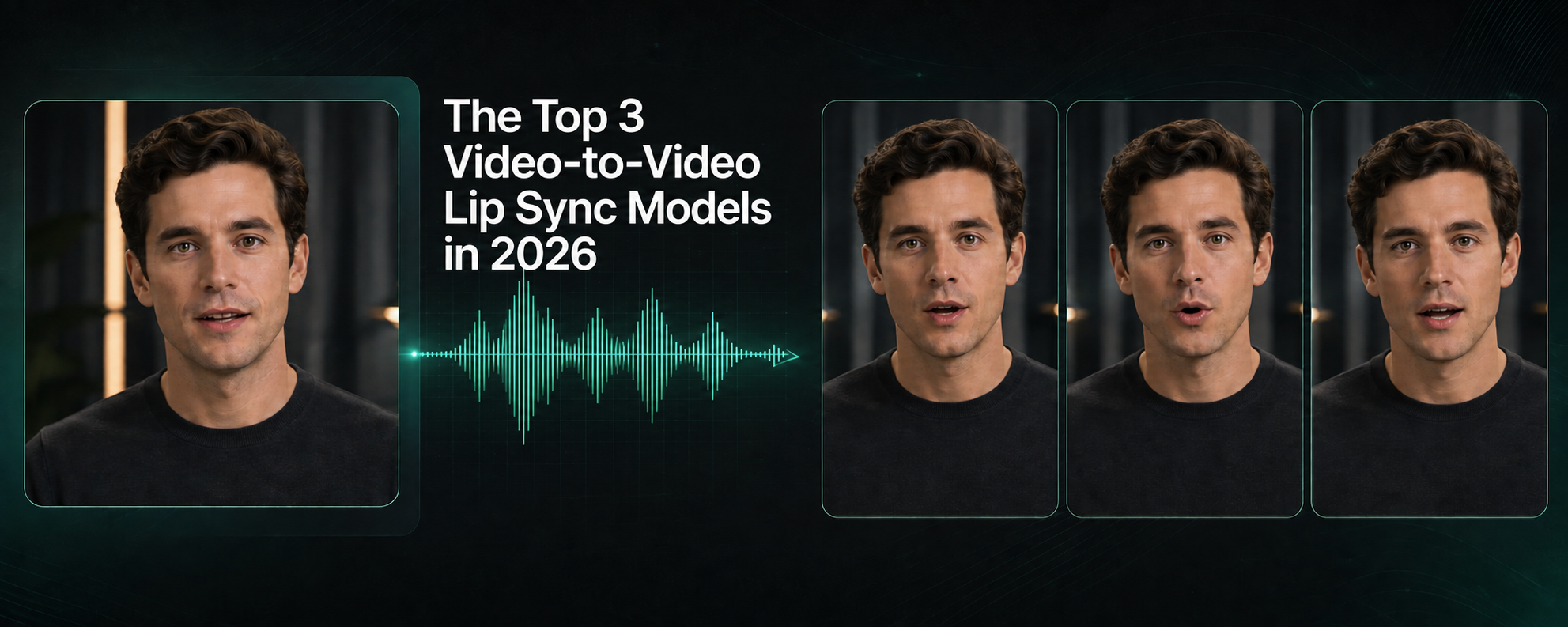
Compare Kling, CHAMELAION and Sync 3 with video examples, per-minute pricing, features, and access through platforms, APIs and SDKs.

Translate Hindi and Portuguese video or audio with CHAMELAION. Upload, choose languages, click Translate, then preview and export in minutes.


© 2025 CHAMELAION GmbH